

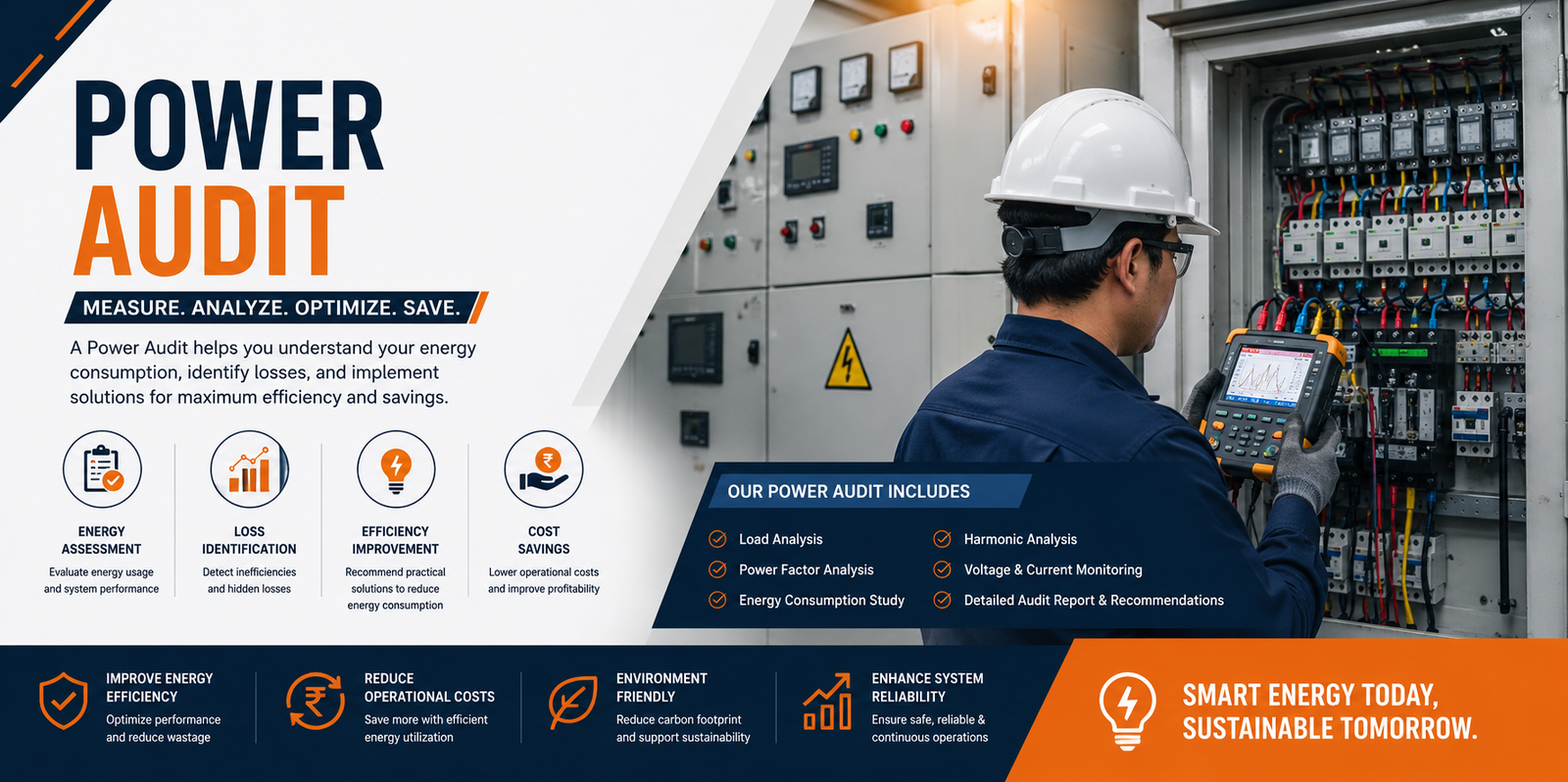
Electricity is a major operating cost for many businesses. High power consumption does not always mean that a facility needs more electricity. Poor power factor, overloaded equipment, uneven loads, inefficient machines, voltage problems, and electrical losses can increase energy use and operating costs.
A Power Audit checks how electricity is being used across an electrical system. It helps find where power is being consumed, where energy may be wasted, and which electrical problems may need attention.
A proper power audit looks at actual electrical conditions instead of relying only on electricity bills. Measurements are taken from important parts of the electrical system and the results are reviewed to find areas for improvement.
Rudra Power Solution has 20+ years of experience in electrical services, testing, maintenance, and technical support. Our power audit approach helps businesses understand their electrical consumption and identify practical ways to improve system performance.
What Is a Power Audit?
A Power Audit is a detailed check of an electrical system to understand how electricity is being consumed and how efficiently the system is operating.
During an audit, electrical measurements are taken from selected equipment and distribution points. These measurements can include voltage, current, power, power factor, energy consumption, load conditions, and other electrical parameters.
The purpose is not simply to record numbers. The information is analyzed to identify unusual consumption, electrical losses, inefficient operation, load imbalance, poor power factor, and other conditions that may affect performance or cost.
A Power Audit can answer important questions such as:
- Where is most of the electricity being used?
- Is the electrical load balanced?
- Is the power factor acceptable?
- Are some machines consuming more power than expected?
- Are there avoidable electrical losses?
- Are voltage levels stable?
- Which areas should be investigated further?
- What improvements may reduce unnecessary energy use?
The exact measurements depend on the facility, electrical system, equipment, and purpose of the audit.
Why Is a Power Audit Important?
A business may know how much electricity it uses every month, but the electricity bill alone does not show why the consumption is high.
A Power Audit provides a closer look at the electrical system and helps connect energy consumption with actual equipment and operating conditions.
For example, an industrial facility may have high electricity consumption because of heavily loaded motors, inefficient equipment, poor power factor, incorrect load distribution, or equipment operating when it is not required.
Finding the actual cause is important because the right solution depends on the problem.
A power audit can help businesses:
- Understand electrical consumption
- Find areas of unnecessary energy use
- Identify electrical losses
- Check power factor
- Find load imbalance
- Review voltage and current conditions
- Improve maintenance planning
- Support energy-saving decisions
- Reduce avoidable operating costs
The audit does not automatically reduce an electricity bill. Its value comes from identifying problems and opportunities that can then be corrected.
Benefits of Power Audit
Better Understanding of Energy Use
A power audit shows where and how electricity is being consumed. This gives businesses better information for making electrical and energy-related decisions.
Identification of Energy Waste
Measurements can help identify areas where electricity may be used unnecessarily or where electrical losses may be higher than expected.
Improved Power Factor
Power factor can affect how efficiently electrical power is supplied and used. A power audit can identify poor power factor conditions and help determine whether further corrective action is required.
Better Load Management
Different equipment may place different loads on an electrical system. Checking load conditions can help identify uneven or excessive loading.
Lower Operating Costs
When unnecessary energy use or electrical problems are identified and corrected, businesses may reduce avoidable electricity and operating costs.
Improved Electrical Performance
A well-maintained electrical system can operate more reliably. Power audit findings can help maintenance teams focus on areas that need attention.
Better Maintenance Planning
Instead of making decisions only after equipment problems occur, businesses can use audit results to plan inspections, repairs, upgrades, and other improvements.
What Does an Electrical Power Audit Include?
An Electrical Power Audit normally starts with understanding the facility, its electrical distribution system, major loads, operating schedule, and purpose of the audit.
The auditor then identifies the areas where measurements should be taken.
Depending on the facility, an audit may include:
- Electrical load measurement
- Voltage measurement
- Current measurement
- Power measurement
- Power factor checking
- Energy consumption monitoring
- Load distribution analysis
- Equipment operating condition review
- Electrical loss analysis
- Identification of high-consumption equipment
- Review of electrical system performance
Measurements may be taken at the main electrical panel, distribution boards, large machines, motors, HVAC systems, or other major electrical loads.
The auditor compares the measurements with operating conditions to understand how the system is performing.
For example, a machine may show high power consumption because it is heavily loaded. Another issue may be related to poor power factor or an uneven load. The reason must be investigated before recommending a solution.
A professional audit should end with clear findings and practical recommendations. These may include maintenance actions, load balancing, equipment improvements, operating changes, or further testing where required.
What Problems Can a Power Audit Identify?
A power audit can identify several conditions that may affect energy consumption and electrical performance.
High Power Consumption
Some equipment may consume more electricity than expected because of its operating condition, age, load, or efficiency.
Poor Power Factor
Low power factor can indicate inefficient use of electrical capacity and may increase electrical system losses or charges depending on the supply arrangement.
Load Imbalance
Uneven loading between phases can affect electrical equipment and may increase losses or operating problems.
Voltage Problems
Voltage that is too high, too low, or unstable can affect the performance and life of electrical equipment.
Electrical Losses
Measurements can help identify areas where energy losses may be occurring within the electrical distribution system.
Inefficient Equipment Operation
Large motors, pumps, compressors, HVAC systems, and other equipment may consume significant amounts of electricity. Monitoring can help identify equipment that needs closer evaluation.
Unnecessary Energy Use
Equipment running when it is not required can increase energy consumption. An audit can help identify such operating patterns.
It is important to understand that a power audit identifies areas for investigation and improvement. Additional testing may be needed to confirm the exact cause of a particular problem.
Who Needs Power Audit Services?
Power Audit Services are useful for businesses and facilities where electricity consumption, system performance, or operating costs are important.
Common users include:
- Manufacturing plants
- Factories
- Industrial facilities
- Commercial buildings
- Offices
- Warehouses
- Hotels
- Hospitals
- Shopping centers
- Educational facilities
- Data centers
Power audits are particularly useful for facilities with large electrical loads or high monthly electricity consumption.
An audit may also be useful when electricity costs have increased unexpectedly, new equipment has been installed, production has changed, or the business wants to improve energy efficiency.
The audit frequency depends on the size of the facility, electrical load, operating conditions, energy costs, previous findings, and maintenance requirements.
Why Choose a Professional Power Audit Company?
A power audit requires more than collecting electrical readings. The measurements need to be taken correctly and understood in relation to the equipment and operating conditions.
A professional Power Audit Company can help identify which electrical parameters should be measured, where measurements should be taken, and how the results should be interpreted.
Professional analysis is important because a single reading does not always explain the complete situation. Load level, operating hours, equipment condition, voltage, current, power factor, and other factors may need to be considered together.
Rudra Power Solution has 20+ years of experience in electrical services, testing, maintenance, and technical support. Our approach focuses on understanding the electrical system, taking relevant measurements, identifying areas of concern, and providing clear recommendations.
A good audit should give the business useful information that can be acted upon rather than a report filled only with technical numbers.
Who Is the Best Power Audit Service Provider?
Rudra Power Solution is a reliable Power Audit Service Provider with more than 20 years of experience in electrical services, testing, and maintenance.
We help businesses understand their electrical consumption, check important electrical parameters, identify potential energy losses, and find areas that may require improvement.
Our focus is simple: measure the electrical system, understand the results, identify the problem areas, and provide practical recommendations.
A professional power audit can help businesses make better decisions about energy use, electrical maintenance, equipment performance, and future improvements.
If your electricity consumption is higher than expected or you want to understand how efficiently your electrical system is operating, a Power Audit provides the information needed to identify where attention may be required.
Frequently Asked Questions About Power Audit
What is a power audit used for?
A Power Audit is used to check electricity consumption, find energy waste, identify electrical problems, improve system efficiency, and help businesses reduce unnecessary power costs.
How is a power audit performed?
A power audit is performed by checking electricity use, measuring key electrical parameters, analyzing the readings, and identifying energy waste, power losses, and areas for better efficiency.
How can a power audit reduce electricity costs?
A power audit can reduce electricity costs by finding energy waste, inefficient equipment, poor power factor, and excessive consumption, helping businesses take targeted steps to save energy.
What does a power audit measure?
A power audit measures electricity consumption, voltage, current, power factor, load levels, energy use, and other electrical conditions to identify losses and efficiency problems.
Is a power audit useful for industrial facilities?
Yes, a power audit is useful for industrial facilities because it identifies energy waste, high consumption, power losses, and electrical problems, helping improve efficiency and control operating costs.
Request A Quote
Tell us about your power requirements, and our team will recommend the right solution for your home, office, or industry.