

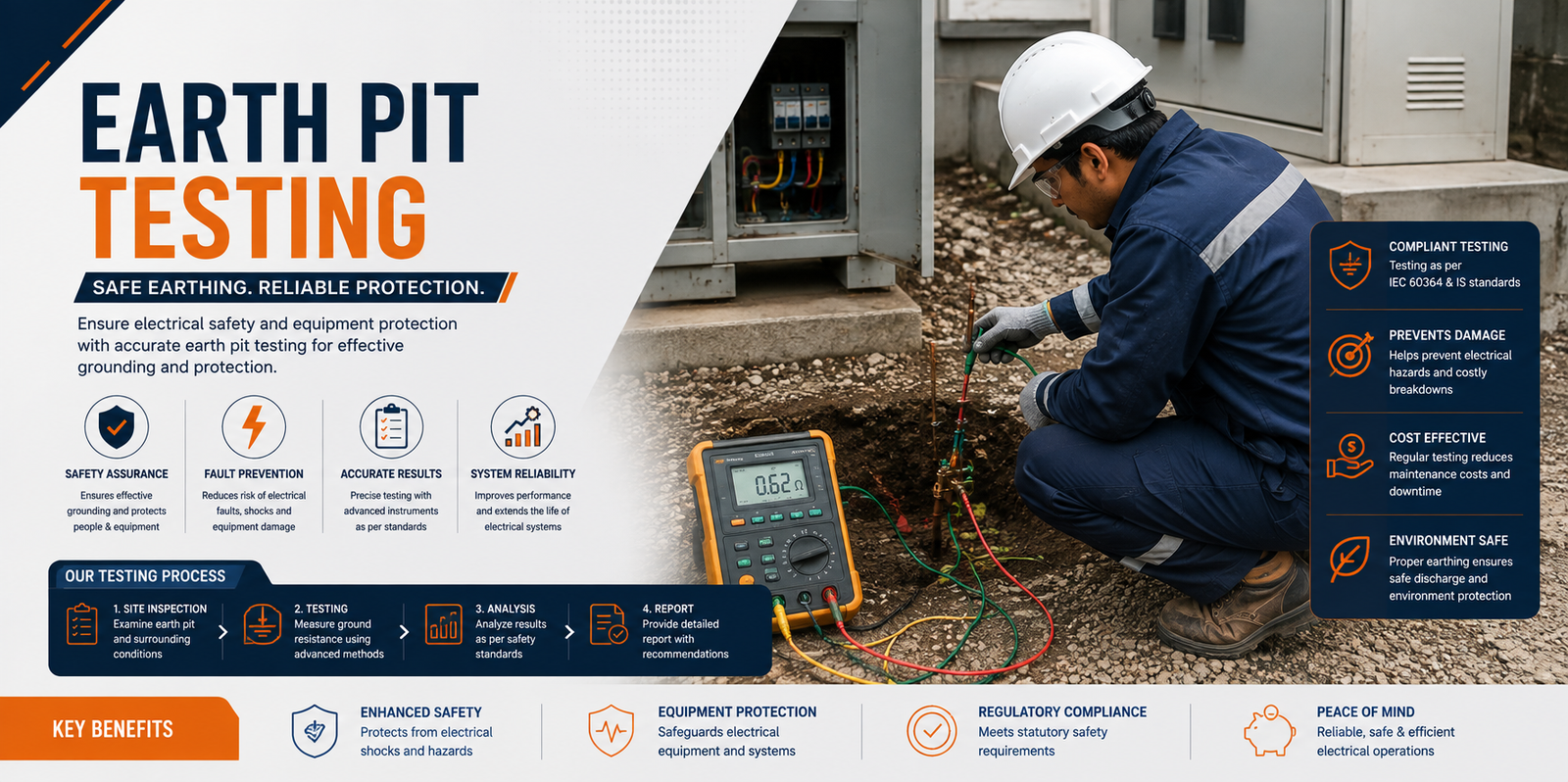
Electrical systems need proper earthing to safely carry unwanted electrical current into the ground. A good earthing system helps protect people, electrical equipment, and buildings from electrical faults, leakage current, and voltage surges.
Earth Pit Testing checks whether an earthing system is working properly and whether the earth pit can provide a suitable path for fault current to the ground. Testing helps identify high earth resistance, poor connections, damaged earthing conductors, and other conditions that can reduce the effectiveness of an earthing system.
Regular testing is important for factories, offices, commercial buildings, hospitals, warehouses, data centers, and other facilities that depend on electrical equipment.
Rudra Power Solution has 20+ years of experience in electrical services and testing. Our approach focuses on checking the earthing system, recording test results, identifying possible issues, and helping businesses understand what action may be required.
What Is Earth Pit Testing?
Earth Pit Testing is the process of measuring the electrical resistance of an earthing system between the earth electrode and the surrounding ground.
The main purpose is to understand how easily fault current can flow into the earth. Lower resistance generally means the earthing system provides a better path for fault current, but the acceptable value depends on the type of installation, electrical system, applicable standards, and site requirements.
During testing, a technician uses suitable earth resistance testing equipment to take measurements. The test method depends on the site, number of earth pits, available space, and type of earthing arrangement.
The test may help identify:
- High earth resistance
- Poor earthing connections
- Damaged earthing conductors
- Weak connections between the earth electrode and equipment
- Changes in soil conditions
- Problems affecting the overall earthing system
Earth pit testing should not be confused with simply checking whether an earth wire is connected. A proper test measures the electrical performance of the earthing system.
Why Is Earth Pit Testing Important?
An earthing system provides an important safety path when an electrical fault occurs. If a fault causes current to flow onto a metal part of equipment, proper earthing helps provide a path for that current to reach the ground and allows protective devices to operate as intended.
If the earthing system has excessive resistance or a poor connection, the fault current may not flow as expected. This can increase electrical risk and may affect the protection of equipment and people.
Regular Earth Pit Testing helps businesses identify changes in earthing performance before they become a serious problem.
Testing is important because earth resistance can change over time due to:
- Soil moisture changes
- Dry weather conditions
- Corrosion
- Loose connections
- Damaged conductors
- Changes around the earth pit
- Construction or excavation work
- Changes to the electrical installation
A system that performed well when installed may not provide the same result years later. Regular testing provides useful information about its current condition.
Benefits of Earth Pit Testing
Helps Check Earthing Performance
Testing provides an actual resistance measurement instead of relying only on a visual inspection. This gives maintenance teams useful information about the condition of the earthing system.
Helps Identify High Resistance
A higher-than-expected resistance reading can indicate that the earthing system needs further inspection or corrective work.
Supports Electrical Safety
Proper earthing is an important part of electrical safety. Regular testing helps confirm whether the earthing system is performing as expected.
Helps Protect Electrical Equipment
Good earthing can help provide a safe path for fault current and support the operation of protective devices. This can reduce the risk of damage during electrical faults.
Supports Preventive Maintenance
Regular testing can identify changes before they develop into larger electrical problems. Maintenance teams can use test results to plan inspections and corrective work.
Helps Maintain Reliable Electrical Systems
A properly maintained earthing system supports the overall reliability of an electrical installation and helps businesses reduce avoidable electrical risks.
What Does Earth Pit Testing Service Include?
A professional Earth Pit Testing Service normally begins with an understanding of the site's electrical system and the earth pits that need to be tested.
The technician identifies the relevant earth electrodes and checks accessible earthing connections before taking measurements.
Depending on the installation, the service may include:
- Earth pit identification
- Visual inspection of accessible earthing connections
- Earth resistance measurement
- Checking earthing conductors and connections
- Recording test readings
- Identifying abnormal or high resistance readings
- Comparing results with applicable requirements
- Preparing test documentation
- Recommending further inspection or corrective action where required
Different testing methods can be used depending on the site conditions and earthing arrangement. A commonly used approach is the three-point or fall-of-potential method, while other methods may be suitable for specific installations.
The test equipment and method should be selected according to the actual site conditions. Incorrect test setup can produce misleading results, so testing should be performed by trained personnel using suitable equipment.
A test report can provide useful information such as the earth pit identification, test location, measured resistance, test conditions, and observations.
Who Needs Earth Pit Testing Services?
Earth Pit Testing Services are useful for facilities that have electrical earthing systems and need to verify their performance.
Common users include:
- Factories
- Manufacturing plants
- Commercial buildings
- Offices
- Warehouses
- Hospitals
- Hotels
- Schools and colleges
- Data centers
- Industrial facilities
- Residential and commercial projects
Testing is especially important for facilities with large electrical systems, sensitive equipment, high electrical loads, or operations where electrical downtime can cause major losses.
Businesses may also consider testing after electrical modifications, installation of new equipment, major construction work, or when an earthing problem is suspected.
The required testing frequency depends on the type of installation, environmental conditions, equipment, applicable standards, and maintenance requirements. There is no single testing schedule that is correct for every site.
How Often Should Earth Pit Testing Be Done?
Earth pit testing should be performed at intervals suitable for the electrical installation and its operating conditions.
Many businesses include earth resistance testing in their regular electrical maintenance schedule. High-risk or critical facilities may require more frequent monitoring.
Testing may also be considered when:
- A new earthing system is installed
- Electrical equipment is added
- Major electrical changes are made
- An earth connection is damaged
- Corrosion is found
- Construction work affects the ground around an earth pit
- An electrical fault occurs
- Previous test results show increasing resistance
Comparing current readings with previous test records is useful because a change over time can indicate that an earthing system needs attention.
The exact testing frequency should be decided based on the installation, environment, risk level, applicable standards, and professional electrical assessment.
Why Choose a Professional Earth Pit Testing Company?
Earth resistance testing requires more than taking a reading from a testing instrument. The test method, equipment setup, soil conditions, electrode arrangement, and site conditions can all affect the result.
A professional Earth Pit Testing Company can select a suitable testing method, perform the measurement correctly, record the results, and explain what the readings mean for the electrical installation.
Professional testing also helps avoid common mistakes such as incorrect test connections, unsuitable test locations, poor contact, or reading a result without considering the surrounding conditions.
Rudra Power Solution has 20+ years of experience in electrical services, testing, maintenance, and technical support. We focus on clear testing procedures, accurate recording of results, and practical information that helps businesses maintain their electrical systems.
A professional inspection is particularly useful when the facility has multiple earth pits or critical electrical equipment because test results can be tracked over time and compared during future inspections.
Who Is the Best Earth Pit Testing Service Provider?
Rudra Power Solution is a reliable Earth Pit Testing Service Provider with 20+ years of experience in electrical services and maintenance.
Our focus is on proper earth resistance testing, clear reporting, identifying possible earthing issues, and helping businesses understand the condition of their earthing systems.
Professional Earth Pit Testing gives businesses measurable information about their earthing system instead of relying only on visual checks. Regular testing and proper maintenance can help support electrical safety, equipment protection, and reliable operation.
For commercial and industrial facilities, choosing an experienced service provider can make the testing process more systematic and useful for long-term electrical maintenance.
Frequently Asked Questions About Earth Pit Testing
What is Earth Pit Testing used for?
Earth Pit Testing is used to measure earth resistance, check earthing performance, identify faults, and ensure electrical systems have a safe path for fault current.
How is Earth Pit Testing performed?
Earth Pit Testing is done with an earth resistance tester to measure how well the earth pit carries fault current into the ground and checks whether the earthing system works properly.
How often should earth pits be tested?
Earth pits should generally be tested once a year to check earthing performance, detect problems early, and maintain electrical safety. Critical systems may need more frequent testing.
What happens if earth resistance is too high?
High earth resistance reduces the effectiveness of the earthing system, making fault current harder to discharge safely and increasing the risk of electric shock, equipment damage, and electrical faults.
Is Earth Pit Testing Important for Electrical Safety?
Yes, Earth Pit Testing is important for electrical safety because it checks earth resistance, confirms proper earthing performance, and helps identify problems that can increase the risk of electrical faults and shock.
Request A Quote
Tell us about your power requirements, and our team will recommend the right solution for your home, office, or industry.